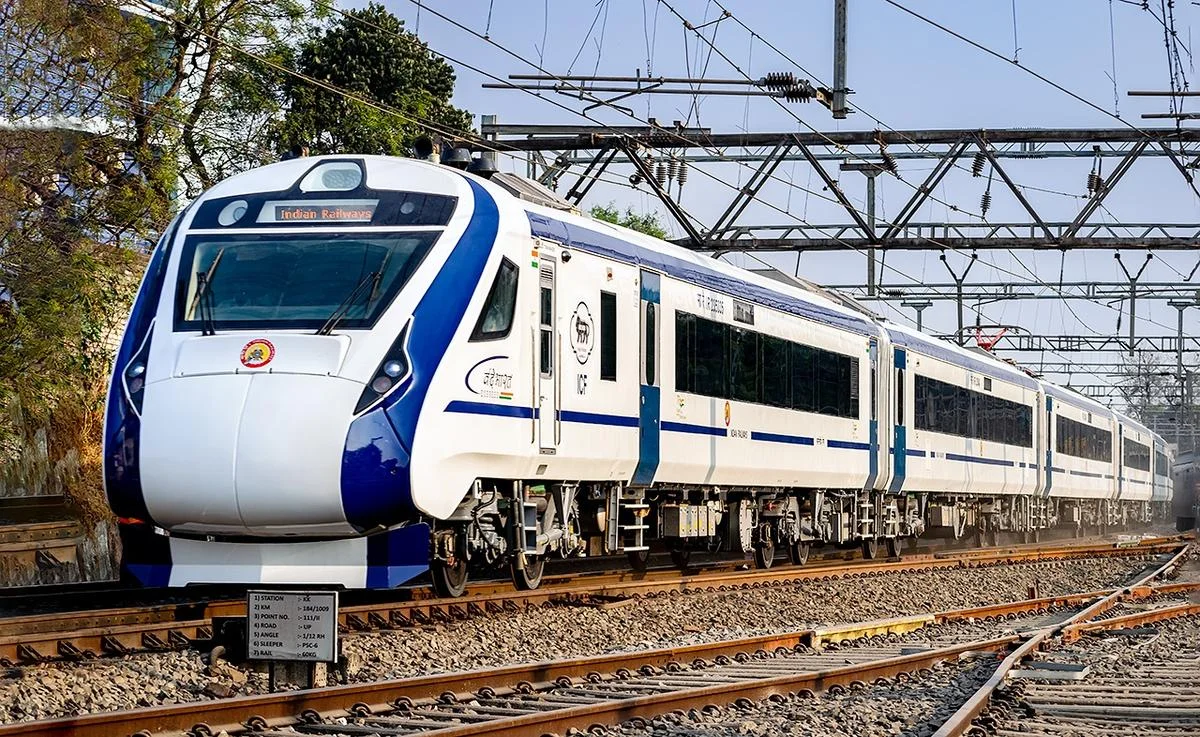
On May 13, 2026, India's Cabinet Committee on Economic Affairs approved a ₹20,667 crore semi-high-speed rail project connecting Ahmedabad to Dholera SIR across 134 km — cutting a 90-to-120-minute road journey down to approximately 34 minutes. For anyone tracking Dholera's investment story, this is not a routine infrastructure announcement. It is the third leg of a connectivity trifecta that no other greenfield city in India has assembled.
Why CCEA Approval Is Not "Just Another Announcement"
Dholera has been announced, re-announced, and heralded in press releases since 2009. Sceptics — and there are legitimate ones — have pointed to that history as a reason for caution. So let me be specific about what CCEA approval actually means, because it is categorically different from a ministry press release or a state government MoU.
The Cabinet Committee on Economic Affairs is chaired by the Prime Minister. An approval at this level means three things have already happened: the project has been technically appraised and the DPR cleared, the central government has committed the funding, and an implementing agency — in this case the National High Speed Rail Corporation (NHSRCL) — has been formally assigned. The money is not "to be allocated." It is allocated.
The closest precedent in Dholera's own history is the Ahmedabad-Dholera Expressway. That project followed exactly this path: CCEA approval → NHSRCL/NHAI assignment → ground-breaking → completion. The expressway is now operational and has already materially changed travel times from Ahmedabad. The rail project is at the same starting gate that the expressway was at — except the expressway took roughly five years from that point. Rail is a more complex build, but the institutional framework is identical and the track record is real.
This distinction matters for investors because it changes the risk profile. "Announced" infrastructure is a speculative catalyst. "CCEA-approved with agency assigned" is an execution risk, not a feasibility risk — and execution risk on NHSRCL projects, post the Mumbai-Ahmedabad bullet train experience, has compressed significantly as the organisation has scaled its project management capability.
The Project: What Is Actually Being Built
Alignment and Stations
The 134-kilometre alignment runs from Ahmedabad south-west to Dholera SIR. Three primary stations are planned:
- Ahmedabad Station — integrated with the existing rail and metro network, giving the line direct multi-modal connectivity to the rest of Gujarat and India.
- Dholera International Airport Station — positioned at the airport currently under construction, with a 2027 operationalisation target. A passenger arriving on an IndiGo or Air India flight to Dholera Airport will be able to board the rail and reach Ahmedabad city centre in 34 minutes.
- Dholera SIR Station — the terminal, positioned inside the Special Investment Region boundary, close to the Activation Area where the first industrial and residential plots have been developed.
The alignment also connects the Lothal Heritage Complex, home to the National Maritime Heritage Complex (NMHC) — one of India's largest tourism infrastructure projects currently under construction. This is strategically relevant: it means the line is not purely industrial. It will carry tourism traffic, government employee commuters, and eventually residential commuters — a demand mix that underpins rail ridership viability from day one.
Speed and Technology
Design speed is 220 kmph. Operational speed will be 200 kmph. This is not a standard metre-gauge or broad-gauge train — it is the same technology class as the Ahmedabad-Mumbai bullet train corridor, built as a standalone high-speed track. The practical implication is that the journey time of 34 minutes is not marketing optimism; it is an engineering output of the distance and the operational speed. At 200 kmph over 134 km, with three stops, 34 minutes is arithmetically consistent.
Cost and Implementation
At ₹20,667 crore for 134 km, the per-kilometre cost is approximately ₹154 crore. This is lower than the Mumbai-Ahmedabad bullet train corridor's per-km cost, which reflects a simpler alignment (less tunnelling, no sea crossing) and the lessons NHSRCL has accumulated from the bullet train project. The implementing agency — NHSRCL — is the same body managing India's first bullet train, giving it the specialist technical capacity to deliver elevated high-speed track at scale.
The "Commutable City" Effect: Why 34 Minutes Changes Everything
There is a well-documented threshold in urban economics: when travel time between a satellite city and its parent metro drops below 45 minutes by a reliable, high-frequency mode, the satellite stops being a "relocation" decision and becomes a "commute" decision. That psychological shift has enormous consequences for demand.
Right now, Dholera is a long-term hold for investors and a relocation decision for early industrial workers. At 90-plus minutes by road — which in peak traffic can stretch to two hours — it asks too much of someone who still has family and social infrastructure rooted in Ahmedabad. When the rail opens, Dholera becomes a suburb of Ahmedabad with green-city infrastructure, wide roads, and dramatically lower land costs. That is the product that gets bought rapidly.
Who Will Actually Use This Rail
The demand base is more concrete than the usual "future residents" abstraction:
- Tata Electronics semiconductor plant workforce. The Tata fab at Dholera is expected to employ 20,000+ people directly when at full production. A significant fraction of management, engineering, and technical staff will prefer to live in Ahmedabad and commute — exactly as IT professionals commute from Whitefield to central Bengaluru, or from Gurugram to Delhi. The rail makes this viable.
- Dholera International Airport staff. An international airport employs thousands of people across airlines, ground handling, customs, retail, and logistics. Most will not want to live in an early-stage greenfield city. Rail gives them the option of Ahmedabad residence.
- DSIRDA and government employees. The Dholera SIR Development Authority has a large administrative and planning function. Senior officers routinely live in the parent city and commute. Rail normalises this.
- Industrial zone workers. DSIRDA's own projections estimate 2 lakh-plus direct and indirect jobs in the SIR by 2030 from the activated industrial plots. Even if 15 percent of that workforce commutes by rail, that is 30,000 daily commuters — enough to make the line economically self-sustaining.
- Lothal and NMHC tourism traffic. Once the National Maritime Heritage Complex opens, it is projected to receive 5 million visitors annually. A significant share will originate from Ahmedabad — the rail will be their logical transit route.
What History Says About Land Near Rail Infrastructure
The pattern of land appreciation ahead of confirmed rail projects is not speculation — it is one of the most consistent phenomena in Indian real estate over the past 15 years. Three cases are instructive.
Delhi-Meerut RRTS (Rapid Rail Transit System)
The Delhi-Meerut RRTS was approved and funded in 2019. Between approval and the first phase opening in October 2023, residential plot prices along the Meerut corridor appreciated between 30 and 40 percent in nominal terms. The biggest gains were not at announcement — they were in the 18-to-24-month window after CCEA-level approval, when buyers understood the project was irreversible. Dholera's rail project is now at exactly that inflection point.
Bengaluru Metro Phase 2 Corridor Effect
When Phase 2 of the Bengaluru Metro was approved and station locations were confirmed, residential property within 1.5 km of planned stations on the ORR and Whitefield extensions appreciated 25-35 percent before a single metre of tunnel was bored. The appreciation was not correlated with completion — it was correlated with the credibility of the commitment. CCEA approval at the national level represents that credibility threshold.
Pune-Mumbai Expressway
Pune-Mumbai Expressway is an older but powerful reference. When the expressway opened in 2002, it triggered a two-decade appreciation cycle in Khopoli, Lonavala, and Pune periphery that produced 8-to-12x returns for landholders who bought before or shortly after opening. The mechanism is identical: a hard travel-time barrier between two economic centres breaks down, and land in the hinterland reprices to reflect the new accessibility.
Dholera's semi-HSR is a materially stronger catalyst than a road expressway because rail is frequency-independent (you can take the next one if you miss yours), weather-independent, and operates at a speed that no road transport can replicate.
Dholera's Connectivity Trifecta: The Only City in India With All Three
Step back from the rail project for a moment and look at Dholera's total connectivity picture. To my knowledge, no other greenfield or tier-2 city in India has all three of these confirmed simultaneously:
- Expressway — operational. The Ahmedabad-Dholera Expressway is complete and open. You can drive to Dholera from Ahmedabad in under 90 minutes today.
- International Airport — under construction, target 2027. Dholera International Airport is a greenfield build with a full-length runway, designed for both passenger and cargo operations. When operational, it gives Dholera direct air access — something Gurugram only got via IGI proximity, not its own airport.
- Semi-High-Speed Rail — CCEA approved, May 2026. 134 km, 200 kmph, 34 minutes to Ahmedabad. Implementing agency: NHSRCL.
For context: Gurugram has road and metro connectivity but no airport. Navi Mumbai has road and metro but its airport has been under construction for two decades. Noida International Airport is under construction but has no high-speed rail link and no operational expressway at comparable speeds. Dholera is in genuinely unprecedented territory for a city of its current scale.
Connectivity Comparison: Dholera vs Comparable Tier-2 Cities
| City / Satellite Area | Expressway Access | Own Airport | High-Speed / Metro Rail | Distance to Parent Metro |
|---|---|---|---|---|
| Dholera SIR | Yes — operational | Yes — under construction (2027) | Yes — CCEA approved, 200 kmph | 134 km / 34 min by rail |
| Navi Mumbai | Yes — multiple | Under construction (delayed) | Metro — partial, no HSR | 35 km / 60–90 min |
| Noida (Greater Noida) | Yes — Yamuna Expressway | Jewar — under construction | Metro (limited frequency) | 70 km / 60–80 min |
| Indore (Smart City) | Yes — NH-47 | Devi Ahilya — existing, domestic | Metro — Phase 1 incomplete | Standalone — no parent metro |
| Surat Expansion Zones | Yes — NH-48 | Domestic only | Metro — approved, not built | Standalone — limited interlink |
| Pune (Hinjewadi / Pimpri) | Yes — expressway | Pune Airport — existing, limited | Metro — partial | 20–35 km / 45–70 min |
No other city on this list combines a fully operational expressway, a greenfield international airport under active construction, and a semi-high-speed rail line with CCEA approval and an assigned implementing agency. That combination is Dholera's fundamental investment differentiator.
The Investment Thesis: Specific and Grounded
Station Proximity Premium
Globally and in India, land within 2-3 km of a high-speed rail station commands a 20-to-40 percent premium over equivalent land further from the station once the line opens. In Dholera's case, the SIR station will be positioned within the Activation Area — the sector that has been the primary focus of plot development by RAV Group and DSIRDA. Plots in Rajpath Supreme 1 and Supreme 2 are within the Activation Area. When the rail station location is finalised and made public, plots in the station's immediate catchment will be repriced — and that repricing will happen before the rail opens.
Current Entry Price vs Projected Post-Rail Price
At the time of writing, Rajpath Supreme 1 plots in Dholera are available in the ₹950-to-1,100 per sqft range. Rajpath Enclave, the earliest RAV Group project which sold at roughly ₹350 per sqft, is now trading in resale at ₹1,100-plus per sqft — a 3.1x appreciation cycle over roughly six years, through a period when the expressway opened but before the airport or rail. The next appreciation cycle — airport opening in 2027, rail operational around 2029-2030 — is a materially stronger set of catalysts than the expressway alone. The question investors should be asking is not "will Dholera appreciate?" but "what is the right entry point relative to where the catalysts are?"
My read: the rail approval marks the beginning of the re-rating window, not the end. Prices will not spike tomorrow. They will grind upward over the next 18-24 months as the project moves from approval to visible ground-breaking, and then again as airport opening approaches in 2027. The window for current pricing is the next 12-18 months.
The Resale Opportunity
Investors already holding Rajpath Enclave or Grand 1 plots — projects that are fully built out and in the resale market — now have a clearer exit thesis. A buyer who purchases a resale plot today is buying with a 34-minute rail commute baked into the project's future, even if the rail is three to four years away. That narrative was not available 12 months ago. Resale pricing has not yet fully reflected the rail approval, which means there is still value in the earlier projects as well.
Investment Timeline: The Layered Catalyst Model
| Year | Event | Investment Implication |
|---|---|---|
| 2024–2025 | Expressway operational; Tata semiconductor plant under construction | Baseline activity established; early buyers absorbed price increase from ~₹750 to ~₹950–1,100/sqft |
| 2026 (now) | CCEA approval for semi-HSR; Tata fab Phase 1 production approaching; Supreme 2 EOI open | Rail catalyst priced in partially; entry window for new buyers at current rates |
| 2026–2027 | Rail DPR finalisation; station location confirmed; construction tendering | Station-proximity premium begins; expect 15–25% appreciation in Activation Area plots |
| 2027 | Dholera International Airport opens (target) | Major re-rating event; airport operational = Dholera becomes a real address, not a future bet |
| 2028–2029 | Rail construction visible and progressing; Tata fab at full production | Rapid appreciation phase; resale market liquidity improves significantly |
| 2029–2030 | Rail operational (estimated); 2 lakh+ jobs in SIR | Commutable city effect kicks in; residential demand from Ahmedabad professionals accelerates |
The compounding logic here is important: each catalyst does not replace the previous one — it layers on top. An investor who enters now gets the full stack of remaining catalysts. An investor who waits for the airport to open will buy at airport-open pricing and only get the rail catalyst. An investor who waits for the rail to open will buy at a fully re-rated price and be left only with the city's long-term growth story — which is still good, but far less asymmetric than today's entry.
Frequently Asked Questions
When will the Ahmedabad-Dholera rail actually open?
The CCEA approval was in May 2026. Based on the Ahmedabad-Mumbai bullet train corridor's timeline (CCEA approval to active construction was approximately two years; construction duration is six to eight years for complex alignments, less for simpler ones), a realistic operational estimate is 2029 to 2031. A 134-km semi-HSR on a largely flat, open alignment is significantly simpler to build than a corridor requiring tunnels and river crossings. I would use 2029-2030 as a working assumption for investors — conservative enough to stress-test, optimistic enough to be achievable.
Which stations will serve Dholera?
Three stations are planned: Ahmedabad (multi-modal hub at the origin), Dholera International Airport (mid-point, positioned at the new airport), and Dholera SIR (terminal, inside the Special Investment Region). The Lothal-NMHC complex is also part of the alignment, though its station status in the current approval should be confirmed as the DPR is finalised.
Can I travel from Delhi to Dholera directly by rail?
Not on this line, which is a standalone 134-km route between Ahmedabad and Dholera. However, Ahmedabad has excellent rail connectivity to Delhi via the existing network. The logical route from Delhi will be: Delhi to Ahmedabad by existing rail or air, then transfer to the semi-HSR for the final 34-minute leg to Dholera. Once the Ahmedabad-Mumbai bullet train corridor is operational, the multi-city high-speed rail network will expand significantly.
Will the Dholera rail station connect to Ahmedabad's own airport?
The origin station is in Ahmedabad city. Integration with Ahmedabad's Sardar Vallabhbhai Patel International Airport will depend on station placement and last-mile connectivity, which is determined at the detailed engineering stage. The more directly relevant airport connection is the planned Dholera International Airport station on the line itself — passengers flying into Dholera will have a direct rail connection to Ahmedabad without needing road transport.
How does the rail approval affect plot prices in Dholera right now?
Prices have not spiked sharply since the May 2026 approval — which, in my view, is the interesting data point. Developer pricing tends to move when they choose to revise price lists, which typically happens 6-to-12 months after a major catalyst, once the on-ground enquiry volume justifies the increase. The approval happened in May. I would expect the first developer price revision in Q3-Q4 2026. Buyers who act in the window between approval and revision get the full benefit of the catalyst without paying the post-catalyst price. This is a short window.
Is this the same technology as the Mumbai-Ahmedabad bullet train?
Same implementing agency (NHSRCL) and comparable speed specification (220 kmph design, 200 kmph operational vs 320 kmph design for the bullet train), but a different technology tier. The Dholera line is classified as semi-high-speed rail — comparable to Japan's Limited Express or Europe's intercity high-speed services, rather than Shinkansen-class. The practical difference for passengers is that it operates on a dedicated elevated track (not shared with freight) and runs at speeds that are roughly double the fastest conventional express trains in India.
My Assessment as Your Advisor
I have been watching Dholera since the early announcements, and I have been cautious — deliberately so — in how I have spoken about it to clients. The pattern of Indian greenfield cities is littered with projects that had government backing, ministerial speeches, and glossy brochures but never crossed the activation threshold that makes land investment irreversible.
Dholera has crossed that threshold. The Tata semiconductor plant is under construction. The expressway is open and you can drive there today. The airport is being built with a runway that is physically visible on satellite imagery. And now the rail has CCEA approval with NHSRCL assigned. These are not announcements. They are construction activities and budget commitments at the highest level of the Indian government.
I do not use the word "once in a generation" lightly. But a greenfield planned city with a semiconductor fab, an international airport, a semi-high-speed rail connection to a major metro, and current plot prices that have not yet fully reflected any of these catalysts — this combination is genuinely rare. The window where all these catalysts are confirmed but prices have not yet fully re-rated is closing. It will not be open in 2028.
If you want to understand how Rajpath Supreme 1, Supreme 2, or the resale plots fit your specific situation — budget, timeline, return expectations — I am happy to walk through the numbers with you personally. There is no obligation, no sales pitch. Just a direct conversation with someone who has done the research and holds no inventory himself.
"The best infrastructure investments are made in the window between CCEA approval and construction visibility. That window is now open for Dholera rail. It will not stay open indefinitely."
— Saurabh Gupta, SmartCityPlots.com