I want to be honest with you about something: when I first visited Dholera in early 2022, I came back uncertain.
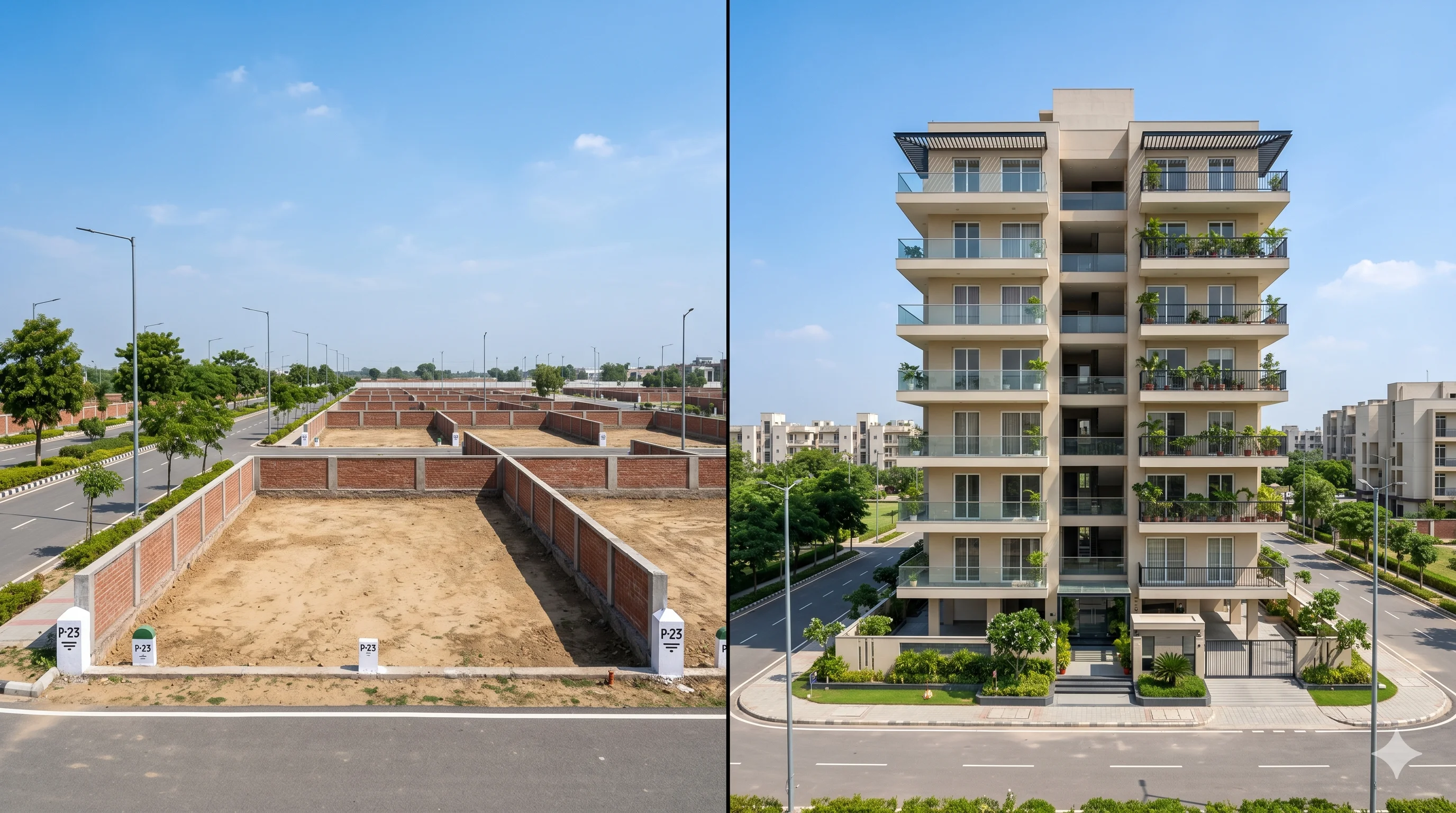
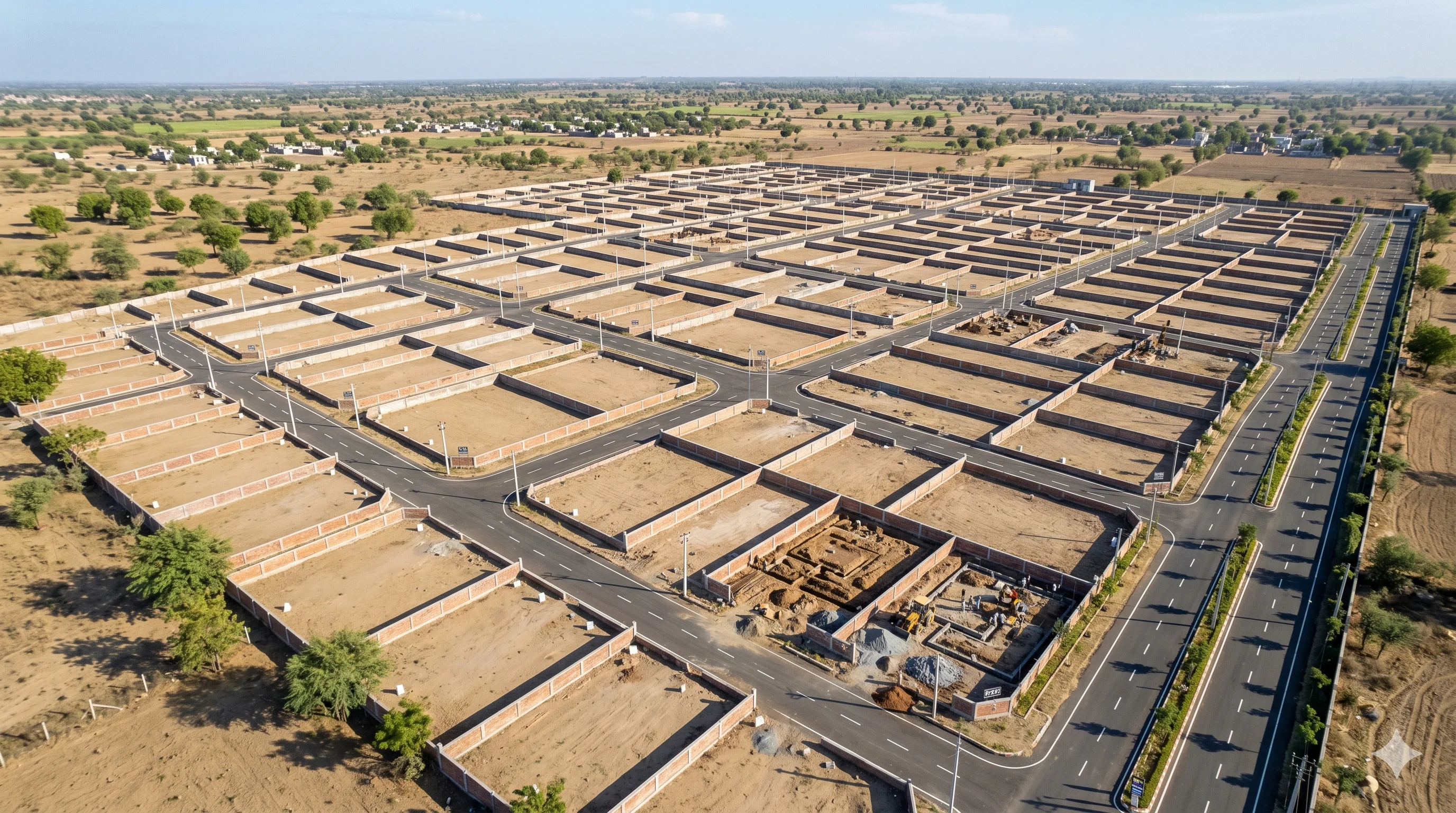
The expressway project hadn't started. The ABCD Building was locked. I drove through Sector 1 on a dirt track flanked by cotton fields. There were a handful of boundary walls, some survey markers, and a lot of open sky. A developer rep drove me around for three hours showing me "what this will be."
I'd been in real estate long enough to know that "what this will be" is how most projects sell — and how most investors lose money waiting.
So I drove back to Ahmedabad and spent the next four days going through DSIRDA documents, the DMIC Master Plan, and every government notification I could find. Then I went back. And then again. And then a fourth time in 2026.
Here is what I actually saw on each visit — and what it changed in how I advise investors today.
Visit 1 — Early 2022: The Sceptic's Eye
What I saw on the ground in 2022 was, frankly, not impressive if you didn't know what to look for.
- The SIR boundary was marked but large sections remained agricultural land under acquisition proceedings
- The ABCD Building complex existed but was only partially occupied — primarily DSIRDA administrative offices
- Trunk infrastructure work (water, sewage, power grids) was underway in Activation Zone pockets but difficult to see from the road
- The Ahmedabad–Dholera Expressway was announced but not yet under active construction at the Dholera end
- One RAV Group project (Rajpath Green City) had buyers who had registered — the first external validation that someone other than the developer believed in this
What kept me from walking away: the government paperwork. DSIRDA is not a private developer's marketing entity — it's a statutory body under the Gujarat government. The Master Plan had been amended, debated in Parliament, and published in official gazettes. The land acquisition was backed by the Land Acquisition Act. These aren't things a developer can fake.
I took on my first two Dholera investors in 2022 — both bulk buyers who understood the 5–7 year horizon and weren't looking for a quick flip.
Visit 2 — Late 2022: The Expressway Begins
By my second visit, the Ahmedabad–Dholera Expressway project was active. I could see construction equipment working at multiple points along the alignment. More importantly, the Gujarat government had committed ₹2,560 crore for the first phase and the timeline was now in public bidding records — not just announcements.
The on-ground changes in the SIR itself were still slow. But I noticed something different in the developer community: RAV Group had sold out Rajpath Green City and was launching Rajpath Enclave. The fact that resale was already starting to occur — buyers selling Green City at a premium to entry price — was the first real market signal I had seen.
I also visited the DSIRDA office and asked a straightforward question: "What happens to the activation zone timeline if private investment doesn't come?" The answer from the official was more confident than I expected — they pointed to DMIC's trunk infrastructure commitment, which was signed and funded at the central level. The Gujarat government was not the sole guarantor. This mattered.
Visit 3 — 2024: Infrastructure You Can See
This is the visit that changed everything for how I talk about Dholera to investors.
The Ahmedabad–Dholera Expressway was operational — I drove it. 109 km in under an hour. What had been a three-hour journey over state highways became a smooth, fast connection between Ahmedabad and the SIR gate. This is not a future story. I drove it.
Inside the SIR:
- The internal road network in Activation Zone 1 was paved and functional — not full four-lane roads, but motorable, maintained roads with drainage
- The ABCD Building was now a proper government complex with the DSIRDA headquarters operational, a visitor centre, and a model of the full SIR visible to investors
- Street lighting had been installed along 15+ km of internal roads
- A new government school and a primary healthcare centre were in operation within the SIR — the first signs of residential support infrastructure
- The Tata Semiconductor plant site had been demarcated and levelled — groundbreaking had occurred. I could see the perimeter fence.
The investor market reflected this. Rajpath Grand 1 had been sold through, and the resale market for Green City and Enclave 1–4 had moved. Buyers who had entered at ₹400–450/sqft in 2022 were seeing offers at ₹700–800/sqft in the resale market. That is a 75–100% move in 18 months on the resale market — and the project hadn't even launched retail yet.
Visit 4 — Mid 2026: You Have to See It to Believe It
I was last in Dholera in mid 2026 with three investors from Mumbai — two were buying their second plot, one was visiting for the first time. I had a singular goal for the day: let the site speak for itself.
The Ahmedabad–Dholera expressway is now a proper high-speed road with service lanes, emergency bays, and petrol stations. The journey from Ahmedabad International Airport to the SIR gate takes 50–55 minutes.
Inside the SIR, the change from 2024 was significant:
- The NMHC Lothal museum site (₹4,500 crore project) had construction activity visible from the main road — cranes, prefab structures, worker camps
- The Tata Semiconductor plant construction was in full swing — the footprint was enormous. For scale: this is the first semiconductor fab in India. You can see it from the SIR's internal elevated road.
- A 5-star hotel near the ABCD Building was under construction — I confirmed from a site manager that the ground floor is pre-leased to Tata Electronics staff
- Two private townships had broken ground in the residential zone — verified as DSIRDA-approved
- The semi high-speed rail corridor (Cabinet-approved ₹20,667 crore, Ahmedabad–Dholera in ~34 minutes) had survey posts and alignment markers on the ground
The first-time investor from Mumbai — a CFO who had been "researching Dholera for two years" — turned to me after three hours on site and said: "I thought I was buying a promise. This is real."
That is the most accurate summary of what has happened here.
What Four Visits Taught Me About Advising Investors
1. Ground truth matters more than brochures. Every project I list, I have personally visited. Not once — multiple times. A developer can show you a master plan render. They cannot fake a running expressway.
2. Government infrastructure is the only reliable anchor. Private developers come and go. Government commitments — DSIRDA, DMIC, NMHC, central rail project — are backed by public money, legal structures, and political capital. Dholera has more government anchors than any project I have seen in 10+ years.
3. Entry timing inside a correct thesis matters, but not as much as staying in. Investors who entered at ₹400 in 2022 and held have seen 2.5× in 4 years. Some sold at 1.5× in 2023 because they needed liquidity. Both decisions were rational. The ones who missed were those who waited to see more progress from 2022 to 2024 and re-entered at ₹700.
4. There is still room — but the easy money is behind us. I will not pretend that entering at ₹750–1,000/sqft in 2026 carries the same risk/return as entering at ₹400 in 2022. It does not. What I can say is that the infrastructure triggers ahead — Tata Fab at full production, NMHC opening, rail corridor — are more certain now than ever. This is no longer a faith investment. It is an infrastructure-driven appreciation play with verified catalysts ahead.
Should You Visit Before Buying?
Yes. I organise site visits to Dholera for every investor who is seriously considering a purchase. I accompany you personally. You see the expressway, the SIR infrastructure, the project plots, and the ABCD Building. You make your decision from evidence, not brochures.
Call or WhatsApp me to discuss. I will tell you honestly whether Dholera is right for your investment horizon and ticket size.